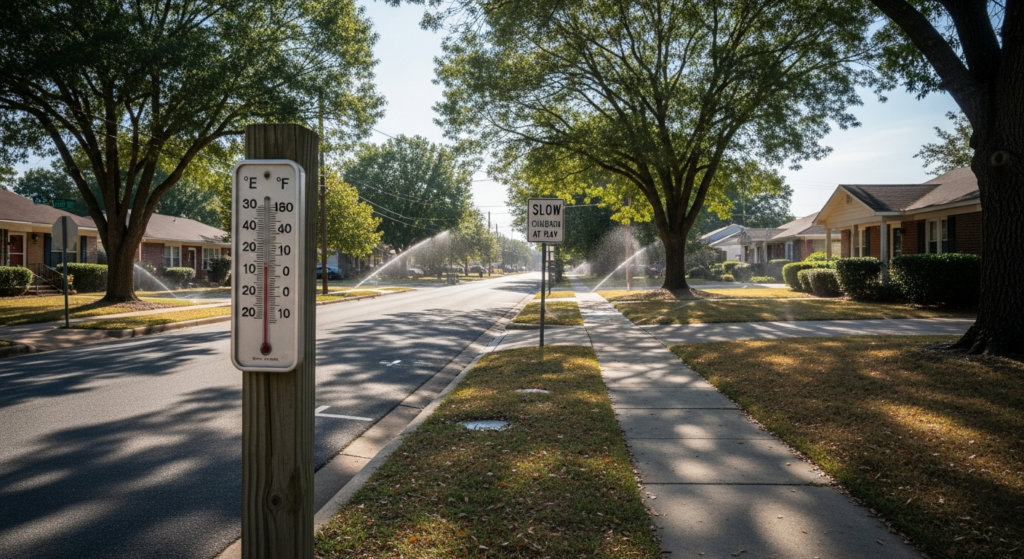
As summer continues in Greer, authorities are reinforcing critical public health guidance regarding the prevention and response to heat-related illnesses. The advisories come as a reminder of the serious risks posed by high temperatures, which contributed to 294 weather-related excessive heat deaths across the United States in 2023.
Certain segments of the population are identified as particularly vulnerable to heat’s effects. These include individuals who work outdoors, such as those at BMW Manufacturing Co. or Greer CPW, where strenuous activity can elevate body temperature. Infants and young children, especially if left unattended in hot vehicles, face heightened risks due to their inability to regulate body temperature as effectively as adults. People aged 65 and older, individuals with chronic health conditions, those taking certain medications, and overweight persons are also among the most susceptible.
For outdoor workers, specific precautions are recommended to mitigate the dangers of heat exposure. Employers and employees are advised to implement shorter shifts, allowing for gradual acclimation to the heat. Consistent fluid intake, even before thirst sets in, is crucial for maintaining hydration. Monitoring coworkers for symptoms of heat stress and taking regular breaks in cool, shaded areas are also vital practices.
Preventive measures extend to the general public in Greer. Utilizing air conditioning is paramount during peak heat hours. When AC is not available, seeking out cooling centers or public spaces with air conditioning can provide relief. Maintaining adequate fluid intake throughout the day, avoiding alcohol, and wearing loose, lightweight clothing and a hat are simple yet effective strategies. Replacing salts lost through sweating with fruit juice or sports drinks can help prevent electrolyte imbalances. It is also advisable to avoid strenuous outdoor activity between 11 a.m. and 3 p.m., when temperatures are typically at their highest. Applying sunscreen and pacing physical exertion are additional safeguards. Community members are encouraged to check on elderly, house-bound, or otherwise vulnerable neighbors, particularly those residing in neighborhoods like Pelham Falls or Thornblade, to ensure their well-being.
Recognizing the symptoms of heat-related illnesses is a critical step in preventing severe outcomes. Heat exhaustion, a less severe but still serious condition, can manifest with symptoms such as pale, ashen, or moist skin; muscle cramps; fatigue, weakness, or exhaustion; headache, dizziness, or fainting; nausea or vomiting; and a rapid heart rate. If these symptoms appear, individuals should move to a cooler environment, rest, and rehydrate.
Heat stroke represents a medical emergency requiring immediate intervention. Signs of heat stroke include a body temperature above 103 degrees Fahrenheit, flushed, dry, hot skin (often with sweating having stopped), rapid breathing, headache, dizziness, confusion or other altered mental status, irrational or belligerent behavior, convulsions, or unresponsiveness. These indicators signal a life-threatening situation.
In the event of suspected heat stroke, immediate action is crucial. The first step is to call 911 without delay. While awaiting emergency medical services, move the victim to a cool place and remove any unnecessary clothing. Rapidly cool the victim using methods such as cold-water immersion or applying cold, wet towels to the skin. Continue cooling efforts until the body temperature falls to approximately 101 degrees Fahrenheit. Throughout this process, monitor the victim’s breathing and be prepared to administer cardiopulmonary resuscitation (CPR) if necessary.
Why it matters in Greer
The ongoing guidance on heat-related illnesses carries particular significance for Greer, a community with a robust manufacturing sector and active outdoor spaces. The safety protocols directly impact the thousands of employees at major local employers like BMW Manufacturing Co. and Greer CPW, many of whom engage in outdoor or physically demanding work. Furthermore, the well-being of children participating in summer programs through the local public school district (GCS) and residents utilizing Greer City Park or Century Park for recreation during the summer months relies on widespread awareness and adherence to these preventive measures. Ensuring that all residents, especially the elderly and those with pre-existing conditions, understand and apply these precautions is vital for public health across Greer.