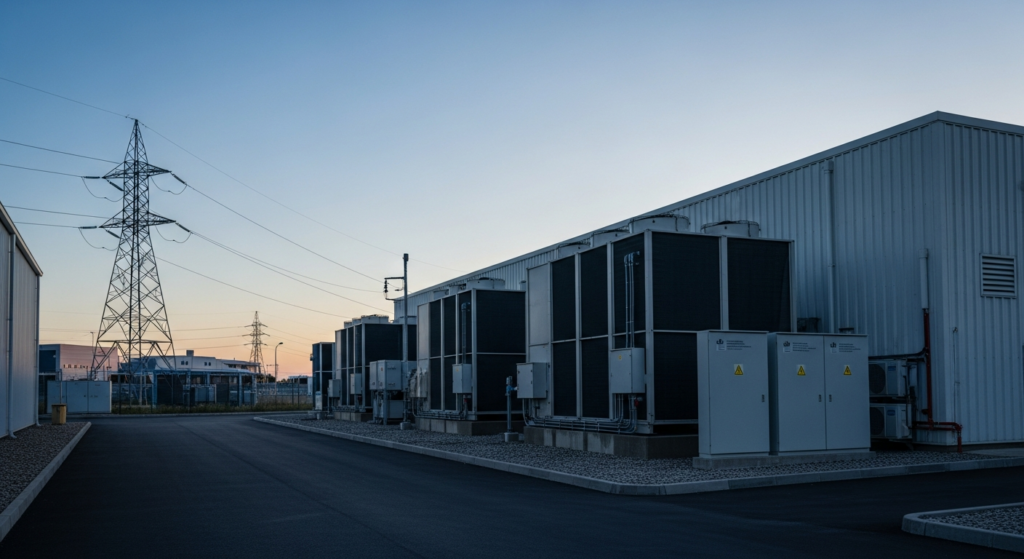
The ongoing expansion of artificial intelligence infrastructure has begun to reshape the focus of business and technology leaders, shifting attention from the availability of advanced computing chips to the fundamental capacity of electrical grids. What was once primarily a challenge of silicon fabrication is now increasingly becoming a question of power generation and distribution.
Industry observers note that the bottleneck for AI development is no longer predominantly the supply of specialized chips, but rather the immense and sustained power requirements of the data centers housing these advanced systems. These facilities, essential for training and operating AI models, consume vast amounts of electricity, placing unprecedented strain on existing power infrastructure.
The escalating demand for energy from AI data centers poses a significant challenge to grid reliability. The continuous, high-density power consumption required by these operations can push local and regional electrical grids to their limits, necessitating substantial upgrades and meticulous long-term planning by utility providers. This shift underscores a broader re-evaluation of energy planning within the technology sector, where hardware demand is now intrinsically linked to the ability of power companies to deliver consistent and sufficient electricity.
For a community like Greer, this evolving landscape means that local entities such as Greer CPW (Commission of Public Works) and the City of Greer must consider these global trends in their long-range infrastructure strategies. While specific AI data center projects in Greer are not currently detailed, the overarching need for robust and reliable power supply remains a constant for economic development and community resilience. The implications extend to how future industrial or technological growth might be supported, requiring proactive engagement with energy providers to ensure the grid can meet anticipated demands.
As businesses continue to invest heavily in AI capabilities, the emphasis on securing adequate power and ensuring grid stability will only intensify. This makes the planning and investment in energy infrastructure a paramount concern, moving it to the forefront of discussions that once centered almost exclusively on processing power and data storage capacity.
Section: More Greer SC business news
Greer business profiles
Filed under: Greer SC Business News