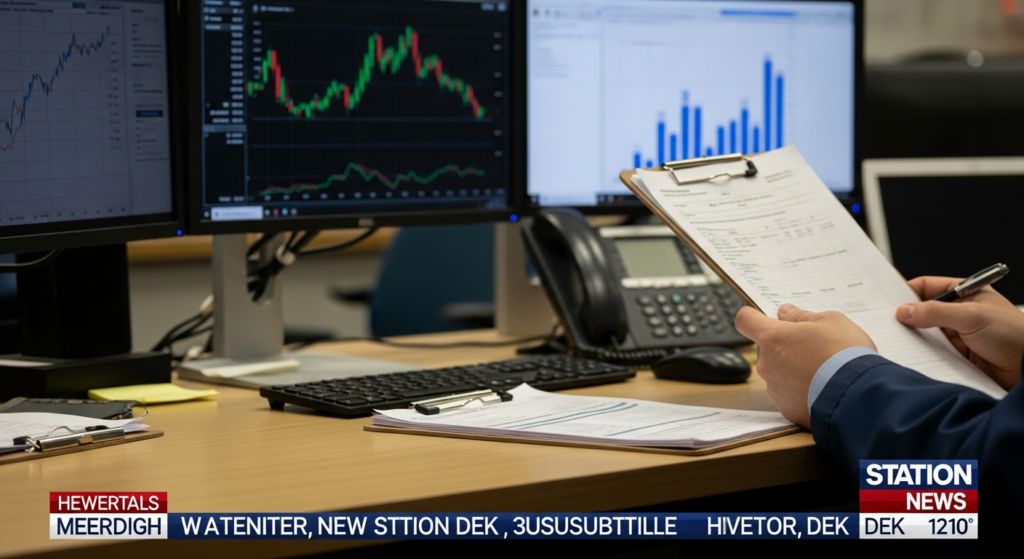
Global financial markets opened with a degree of caution this week as investors closely monitored a confluence of factors, including fluctuating oil prices, evolving international trade dynamics, and the latest corporate earnings reports. This cautious sentiment, observed across major trading sessions, reflects an ongoing assessment of the global economic landscape and its potential implications for regional economies, including that of Greer.
The broader market context saw Asian shares register gains following a rally on Wall Street, a movement largely attributed to recent data indicating a deceleration in inflation. While this offered some relief, the underlying concerns about commodity prices and geopolitical stability continue to shape investor behavior.
Oil prices remain a significant watch item for market participants. Fluctuations in crude oil can have far-reaching effects, influencing everything from transportation costs to the price of raw materials used in manufacturing. For a city like Greer, with its strong emphasis on advanced manufacturing and logistics, the stability of oil markets is particularly pertinent. Major employers such as BMW Manufacturing Co., a cornerstone of the region’s advanced manufacturing sector, rely on intricate global supply chains where energy costs are a critical component. Similarly, operations at GSP International Airport, a key logistical hub, are directly impacted by fuel prices, which can affect freight costs and travel expenses.
Trade developments also command considerable attention. The interconnectedness of the global economy means that shifts in trade policies, tariffs, or international agreements can create both opportunities and challenges. Companies in Greer, particularly those involved in export-oriented manufacturing or relying on imported components, must navigate these complexities. The robust manufacturing base in Greer, supported by companies like Univar Solutions and O’Neal Inc., is sensitive to the ease and cost of international trade. Any disruptions or changes in trade relationships can influence production costs, market access, and ultimately, profitability.
Corporate earnings reports serve as a vital barometer of economic health, offering insights into company performance and consumer demand. As businesses release their quarterly results, investors analyze these figures to gauge the strength of various sectors and the overall economic trajectory. Strong earnings can signal robust consumer spending and business investment, while weaker reports might suggest headwinds. For the local economy in Greer, the performance of large national and international corporations can indirectly affect employment trends, consumer confidence, and the spending power of residents. When major companies report positive outlooks, it can foster a more optimistic environment for local businesses and job growth.
The recent data pointing to slowing inflation has been a notable development, contributing to the positive sentiment observed in some equity markets. A moderation in inflation can alleviate pressure on central banks to raise interest rates, potentially leading to more favorable borrowing conditions for businesses and consumers. For Greer, this could translate into more accessible credit for small businesses looking to expand or for residents considering major purchases, subtly influencing the local economic pulse.
It is important to note that this market coverage provides general business context and does not constitute investment recommendations. The financial markets are dynamic, and various factors can influence their movements. The ongoing vigilance regarding oil, trade, and company performance underscores a period of careful assessment for investors and businesses alike.
Why it matters in Greer
The cautious opening of global markets, driven by factors like oil prices and trade, holds tangible relevance for Greer’s economic stability and growth. As a hub for advanced manufacturing, anchored by major employers such as BMW Manufacturing Co., Greer’s economy is deeply integrated into global supply chains and international trade networks. Fluctuations in oil prices directly impact the operational costs for manufacturers and logistics providers, potentially affecting production expenses and the cost of goods. Similarly, shifts in global trade policies can influence the competitiveness of Greer-based industries that rely on exports or imported materials. The performance of these key sectors, in turn, influences local employment, the vibrancy of local businesses along corridors like Wade Hampton Boulevard, and the overall economic well-being of families in neighborhoods from O’Neal Village to Thornblade. Understanding these broader market signals helps local stakeholders anticipate and adapt to economic shifts that originate far beyond the city limits but have direct consequences for Greer’s prosperity.
Section: More Greer SC business news
Greer business profiles
Filed under: Greer SC Business News