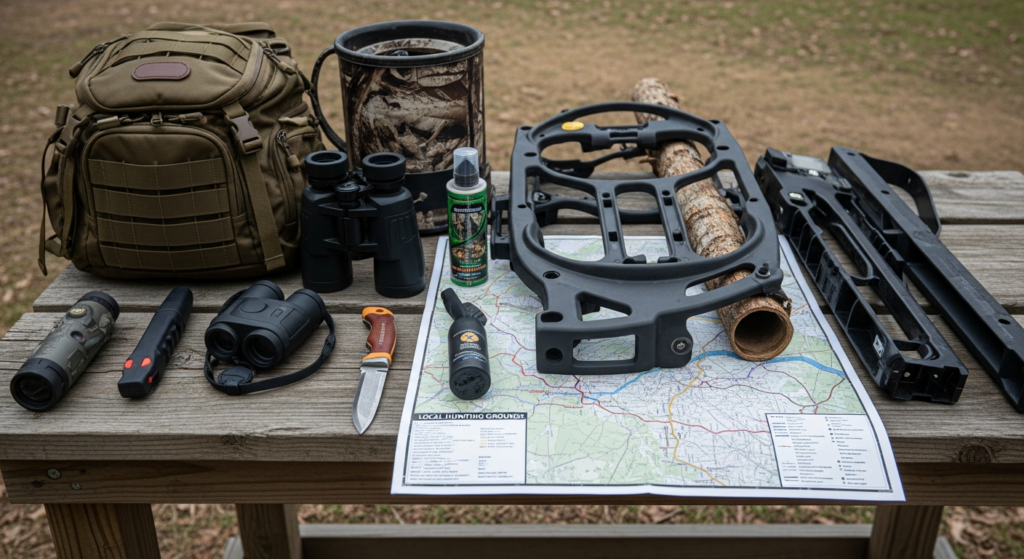
As the deer hunting season draws nearer across the Upstate South Carolina region, hunters in Greer and surrounding communities are being encouraged to undertake a rigorous preseason preparation regimen. A detailed checklist, widely circulated among the hunting community, underscores the importance of meticulous gear inspection, strategic planning for stand placement, and advanced scouting methods, including the use of mapping applications and trail cameras.
For bowhunters, the preseason period offers a critical window for equipment assessment. Experts advise a meticulous inspection of bows, focusing on potential wear and tear in limbs, cams, and strings. Worn or separated components can compromise both accuracy and safety, potentially leading to equipment failure at a crucial moment. Regular waxing of bowstrings is also recommended to maintain their integrity and extend their lifespan. Any questionable parts should be replaced proactively, well before the season begins, to avoid last-minute issues. Beyond equipment, consistent shooting practice is underscored as essential, allowing hunters to build muscle memory, refine their form, and achieve the consistency necessary for ethical and effective hunting in the varied terrain surrounding Greer.
Rifle hunters face a similar imperative for preparation. The checklist recommends thoroughly cleaning and oiling rifles to ensure smooth operation and prevent corrosion, particularly after storage. Verifying that scopes are securely mounted is a fundamental step, as even minor shifts can drastically affect accuracy. A visit to a shooting range to verify the rifle’s zero is considered indispensable, ensuring that the firearm is sighted in correctly for the distances expected in the field. For those using broadheads, an arrow spinner is advised to check for straightness and proper alignment, which are critical for accurate flight and effective penetration.
Personal gear, especially clothing, plays a significant role in a successful and safe hunt. The guide suggests washing all hunting clothing with scent-free detergent to minimize human odor, which can alert deer to a hunter’s presence. Checking garments for holes, worn seams, and fading ensures they remain durable and provide adequate camouflage. New footwear should be broken in well in advance to prevent discomfort and blisters during long treks. Verifying the waterproofing of outerwear is also crucial, given the potential for summer storms and morning dew in the Upstate. Additionally, treating clothing with permethrin is recommended as a proactive measure against tick-borne illnesses, which are a persistent concern in wooded areas throughout the region.
Safety and navigation are paramount, particularly when hunting from elevated positions. The checklist strongly advises inspecting all treestands, ladder stands, and climbing sticks for signs of rust, loose fasteners, cracks, or frayed straps. These components are subject to environmental wear and tear and must be in optimal condition to prevent accidents. Testing a full-body harness with a lifeline is also highlighted as a non-negotiable safety practice, ensuring that hunters are secure when ascending, descending, and sitting in their stands. For navigation, fully charging GPS units and external battery packs is essential, as is downloading mapping applications to smartphones or other devices when needed. These tools are vital for navigating unfamiliar terrain and ensuring a safe return, especially when hunting in dense areas or at dusk.
Strategic stand placement is a cornerstone of effective deer hunting. The guide recommends positioning stands near natural pinch points, funnels, creek crossings, or staging areas that are close to food sources or bedding grounds. These locations are natural travel corridors for deer. Hanging stands early in the season, ideally weeks before opening day, allows deer to acclimate to their presence, reducing the likelihood of them avoiding the area. When trimming shooting lanes, a conservative approach is advised, removing only what is necessary to provide clear lines of sight without significantly altering the natural cover. Using quiet and scent-free methods during stand setup further minimizes disturbance to the local wildlife.
Map scouting, both digital and physical, offers a powerful advantage. Hunters are encouraged to study contour lines on topographical maps to identify saddles, ridges, and draws, which often serve as natural travel routes for deer. Identifying creeks, ponds, and low spots helps locate water sources and potential bedding areas. Marking agricultural fields, such as corn or soybean plots common in Greenville County, along with oak stands and natural browse areas, helps pinpoint food sources. Evaluating access routes under different wind conditions is also critical, allowing hunters to approach their stands without their scent being carried directly to deer. The REVEAL app, for instance, offers an Xtra add-on, available for $4 per month, which includes property boundaries, property information and access details, shape and path drawing tools, and custom pins, providing invaluable data for detailed scouting.
Trail cameras have become an indispensable tool for many hunters, offering insights into deer movement patterns. Preseason preparation for these devices includes deploying cameras well before opening day to gather sufficient data on local deer activity. Fully charging batteries and formatting and labeling SD cards, when used, are fundamental steps to ensure reliable operation. Testing the field of view, motion activation, flash, and other settings in the intended deployment location helps optimize performance. For cellular cameras, activating and updating them to the latest firmware before deployment is crucial for seamless data transmission. The guide also recommends using the latest REVEAL app version for optimal camera management. Notably, Ultra and REVEAL 3.0 series cameras feature internal memory, making external SD cards optional for these models.
Why it matters in Greer
The meticulous preparation for deer hunting season outlined in this guide holds significant relevance for the community of Greer. With its proximity to expansive natural areas, including portions of the Enoree River watershed and the South Tyger River watershed, outdoor recreation, including hunting, is a popular pursuit for many residents. Adhering to these preseason recommendations not only promotes ethical and successful hunting but also enhances safety for individuals venturing into the wilderness. Responsible hunting practices contribute to local wildlife management efforts and ensure the continued health of deer populations, which are an integral part of the Upstate’s natural ecosystem. For local businesses, particularly those catering to outdoor enthusiasts, the annual preparation cycle drives demand for gear, maintenance services, and related supplies, contributing to the economic vitality of Greer’s retail sector. Maintaining a high standard of preparation helps preserve the region’s hunting heritage while fostering a culture of safety and environmental stewardship among Greer’s outdoor community.